

Why should I study this subject?
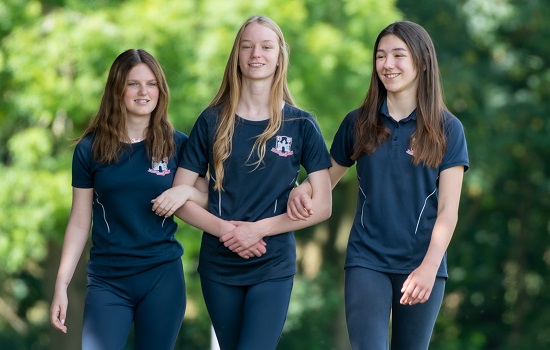
GCSE Physical Education is one of the most rewarding subjects for developing the whole person – physically, mentally and socially. Throughout the course, students build fitness, resilience and confidence, while developing strong teamwork and leadership skills.
They learn how to perform under pressure and gain a broad, practical understanding of health, wellbeing and physical activity that benefits both themselves and others.
Research from the Department for Education highlights Physical Education as the third most influential subject in relation to future earnings, underlining the valuable life and career skills it develops.
For students who choose GCSE PE, it is often one of the most enjoyable and fulfilling subjects they study.
What will I study?
The GCSE Physical Education course involves spending long periods mastering the skills of badminton, basketball, and either athletics or swimming.
You can also be assessed in practical activities you perform in your own time, in core PE and also in something you represent the school for. In all cases, this is dependent on the activity being on the specified list.
How will I be assessed?
For GCSE Physical Education, we follow the AQA syllabus and this means that your final grade is decided by practical components, a written examination involving two theory papers, and a written coursework assignment. This is broken down as follows:
Paper 1: The Human Body and Movement in Physical Activity and Sport
- Exam duration: 1 hour 15 minutes
- 78 marks
- Worth 30% of final mark
Paper 2: Socio-Cultural Influences and Well-being in Physical Activity and Sport
- Exam duration: 1 hour 15 minutes
- 78 marks
- Worth 30% of final mark
Non-Exam Assessment: Practical Performance in Physical Activity and Sport
- Practical performance in three different activities assessed in the role of player/performer, each activity worth 10% of your GCSE (one in a team activity, one in an individual activity and a third in either a team or in an individual activity).
- The final 10% of your qualification comes from a written analysis and evaluation of performance using the theory content you have learned.
Are there higher and foundation tiers?
No. All students sit the same exam and study the same content, with questions designed to allow achievement across the full range of grades (9–1).ut and also receive good coaching. However, this subject is 70% theory, so if you are good at the sciences, and follow sport closely, you could still do very well by just being serious about sport at school.
Are there any trips or enrichment opportunities?
TBC
Will this course be good preparation for post-16 study?
GCSE PE is excellent preparation for post-16 study because it develops knowledge of anatomy, physiology, and sports science, alongside practical skills in performance and teamwork. It also builds analysis, problem-solving, and independent learning skills, all of which are useful for further study in sport, health, and science-related subjects.
Do I need to be really good at sport?
It is more difficult to achieve a good pass (5 and above) if you do not have at least one sport you are serious about and also receive good coaching. However, this subject is 70% theory, so if you are good at the sciences, and follow sport closely, you could still do very well by just being serious about sport at school.
Will I have to perform in front of other people?
Yes. The success criteria laid out by the exam board stipulates that you must be assessed during a competitive game in the full version of each sport. The exam board also requires video evidence of performances and it is usual for a visiting member of the exam board to come into school and watch you perform in at least one sport.
How fit do I need to be?
At the very least, you need to be of average fitness when you start the course. There may be times when you will be playing sport for over three hours a day. You will also have to complete a variety of fitness tests and work hard in sports you are unaccustomed to, which can be very tiring.
Is there much writing?
Yes. You will have at least one theory lesson a week where you will be given a key notes book to complete and a workbook for related tasks. There will also be weekly homework tasks, plus facts tests and key tests each half term.


